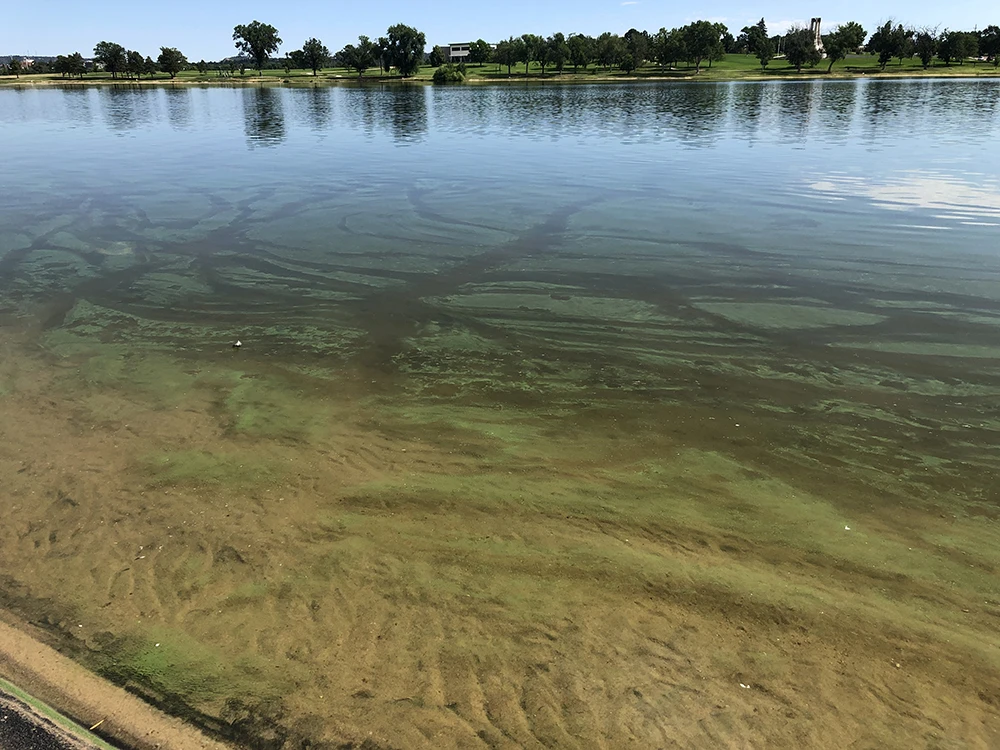
Prospect Lake | Courtesy of ColoradoSprings.gov
Here's how you can be cautious around lakes and ponds this summer.
With the rise of blue-green algae blooms in Colorado, and across the country, the Colorado Department of Public Health and Environment (CDPHE) is encouraging people (and their pets) to exercise caution at lakes and ponds this summer.
What Is the Toxic Blue-Green Algae?
Blue-green algae is a bacteria called cyanobacteria and it's most common in non-flowing freshwater (i.e., ponds and lakes), but it can occur in rivers and creeks, as well, if the bodies of water are still. It's naturally occurring in Colorado, but it multiplies quickly when conditions include sustained hot weather, stagnant water, and polluted stormwater runoff.
"Some algae blooms produce toxins (poisons) that can cause illness in humans, pets, waterfowl, and other animals that come in contact with the algae. These are called harmful algae blooms (also called HABs or toxic algae)," says the CDPHE.
It can be rather difficult to spot or differentiate from one algae to another, so it's best to simply avoid it altogether. The algae "blooms" clump together near the surface of the water and typically vary in color from bright green to brown.
How to Avoid the Toxic Blue-Green Algae
It is advised that humans and their canine companions avoid possible contact with toxic algae (not just blue-green algae). Below is a list of tips, taken directly from the Centers for Disease Control and Prevention.
Avoid entering or playing in bodies of water that:
- Smell bad
- Look discolored
- Have foam, scum, or algal mats on the surface
- Contain or are near dead fish or other dead animals (for example, do not enter a body of water if dead fish have washed up on its shore or beach)
Blue-green algae is extremely toxic to dogs, and they can die within hours of ingestion. Take these precautions to keep your pet safe:
- Do not let pets eat algae, get in the water, or go on the beach or shoreline.
- Rinse pets off with tap water after they have been in a lake, river, or pond; do not let them lick their fur until they have been rinsed.
- Seek veterinary care immediately if your pet has consumed or licked algae on its fur after swimming or playing in water that has an algal bloom.
Last year, several dogs across the nation that swam in what seemed like clean water died due to exposure.
Share your thoughts in the comments below.
"avoid it" - Google News
June 12, 2020 at 08:39AM
https://ift.tt/2B641yY
Toxic Blue-Green Algae in Colorado: What It Is and How to Avoid It - Our Community Now at Colorado
"avoid it" - Google News
https://ift.tt/3844a1y
https://ift.tt/2SzWv5y


No comments:
Post a Comment