Rechercher dans ce blog

Monday, January 9, 2023

This Silly Banking Mistake Cost Me Money in 2022. Here's How You ... - The Motley Fool

ragamnyakabar.blogspot.com
This Silly Banking Mistake Cost Me Money in 2022. Here's How You Can Avoid It

This device is too small

If you're on a Galaxy Fold, consider unfolding your phone or viewing it in full screen to best optimize your experience.

Skip to main content
Many or all of the products here are from our partners that pay us a commission. It’s how we make money. But our editorial integrity ensures our experts’ opinions aren’t influenced by compensation. Terms may apply to offers listed on this page.
A stressed businesswoman sitting at her computer with her hand on her face.

Image source: Getty Images

Even people who write about personal finance aren't immune to costly errors.


Key points

  • I spent $50 on pointless savings account fees in 2022.
  • Once I realized how simple it was to stop paying the fee, I made some changes.
  • You can avoid my mistake by learning your account's requirements, switching to a bank that doesn't charge account maintenance fees, or by opening a special type of account if you're eligible.

2022 was full of wins for my bank account. I got out of debt, increased my income, and started saving money to buy a house in the next few years. I settled into my new career as a writer and editor, and finally felt as if I'd made the right choice to change careers in 2021. Unfortunately, not every move I made was a winner.

I lost $50 to account maintenance fees in 2022. While this is a pretty small amount of money, I'm kicking myself a little, because as a personal finance writer, I really should have fixed this problem sooner than I did. Plus, it was such an easy fix. Thankfully, I have resolved it and will no longer be charged that fee. Here's what happened.

How I fell prey

I had a lot to juggle in 2022, between taking on new professional duties and working a lot of extra hours to achieve debt payoff. As so much of my attention was on work, I only vaguely registered that the savings account I opened several years ago was suddenly charging me a $5 monthly maintenance fee.

I originally opened the account (which is linked to the checking account I have with the big national bank I've been with since college) so I could have some money in it for overdraft protection. This was back when I still lived paycheck to paycheck and didn't really make enough to save much money, so at the time, I set up the account to just automatically take $25 per month from the linked checking account. Unless I was saving for a specific goal (like moving; I do that often), I just kept a few hundred dollars in that account and dipped into it occasionally to cover shortfalls.

In early 2022, its balance was about $100 after I made a withdrawal, and I stopped paying much attention to it. I opened a high-yield savings account with an online-only bank, so I would have a place to keep money for freelance taxes and for my eventual home purchase. As a result, I hadn't bothered adding anything to the old savings account beyond that $25 automatic transfer. However, the bank noticed I was neglecting it, and started charging me $5 per month -- for the 10 months it took me to fix the problem.

This is the part of the story where I hang my head in shame, because when I finally flipped back through my bank statements and saw that I'd lost $50 to those fees, I discovered that the minimum balance required to avoid that fee was only $300. Now, $300 is a decent chunk of money, but I could easily have funded my account back in the spring, kept it at $300, and not been charged even once. Live and learn!

I transferred money to the account and will keep it at $300 moving forward. Since it still collects $25 per month from my checking, I will be moving any money above $300 to my other savings account, where it will earn much more interest. I like having this account linked to my main checking account, however, as it's nice to have overdraft protection.

How can you avoid bank fees?

Thankfully, there are a few ways you can avoid my mistake and skip paying account maintenance fees:

  • Read the fine print: If I had bothered to read the details on my account sooner, I would have known that leaving the account under $300 would result in fees. Don't be like me! Read the fine print on your account so you know the requirements.
  • Open an account without fees: Some savings accounts come without any fees at all. These are often geared toward seniors or students, so if you're a standard adult like I am, you may not qualify for one. It pays to ask, though.
  • Switch banks: Some banks, especially online-only banks, have done away with account maintenance fees altogether. Do your research to find one before you switch banks.

Getting better with money is a journey, not a destination, and while I feel great about a lot of the moves I made in 2022, this mistake is not one I'm proud of. That said, I'm glad it only cost me $50 overall, and the problem was easy to fix. If you're paying an account maintenance fee every month, I recommend taking the above steps to keep your money from leaking away.

These savings accounts are FDIC insured and could earn you more than 13x your bank

Many people are missing out on guaranteed returns as their money languishes in a big bank savings account earning next to no interest. Our picks of the best online savings accounts can earn you more than 13x the national average savings account rate. Click here to uncover the best-in-class picks that landed a spot on our shortlist of the best savings accounts for 2023.

About the Author

Featured Articles

Adblock test (Why?)


"avoid it" - Google News
January 09, 2023 at 09:30PM
https://ift.tt/OzqQS0N

This Silly Banking Mistake Cost Me Money in 2022. Here's How You ... - The Motley Fool
"avoid it" - Google News
https://ift.tt/uGlX5S1
https://ift.tt/v7QtSPV

Emotional Eating: Its Causes and How to Avoid It - Anti Aging News

ragamnyakabar.blogspot.com

From this question alone, you can easily understand that emotional eating is a way of consuming food to deal with overwhelming feelings of distress and anxiety. We've all been there, and this type of diet is not the one that should be followed.

While an occasional trip to the fridge for a midnight snack is totally OK, emotional eating will have you going back and forth.

Learn more about why you are eating through the pain and how you can help make this right.

Emotional Eating Triggers

We don't see binge eating only in movies. It's an eating disorder that's common in real life too. In the United States, around 4 million people are affected by it. According to statistics, it's more common with women than with men. 

Both women and men share the same triggers for compulsive eating, and they are:

Work Stress

Imagine coming home from a stressful day at work: you've been dealing with unbearable clients all day, overwhelmed with paperwork, or it's just one of those days. The second you enter your apartment, you make your way to the fridge and pull out anything you can munch on without reheating, cooking, or special preparation.

And before you know it, your dinner for tomorrow is gone tonight. You ate it all up as you were thinking about work stress and didn't even notice. 

This can disrupt your meal prep for tomorrow, hurt your stomach, and cause headaches after you finish your meal.

Relationship Struggles

Going through a rough patch with your partner can cause emotional eating also.

We've all seen these plots in romantic movies. The main character gets their heart broken, and the perfect healer is an ice cream bucket that's conveniently waiting in their freezer after a failed date or a breakup.

While you might not have ice cream ready to heal your emotional wounds, you've surely tried this "therapy" with some other food, and it probably didn't work.

Binge eating because you're experiencing stress is actually a common way to compress the emotions that you're feeling.

Seasonal Depression

Seasonal depression hits differently. It usually starts at the beginning of autumn and lasts until the end of winter. During this long, cold period, people mostly lock themselves in their "dens" and eat their stress away.

Some common stressors are the Sun setting earlier, the holiday rush, cold weather, and so on.

Although the Christmas season is supposed to be filled with joy, we cannot escape the stress surrounding plans, family members, finals, exams, work, etc.

Health Issues

Understanding different diets is key to finding out what your body needs and what doesn't work for you. For instance, binge eating is a diet that doesn't work for anyone. 

If you're having some health problems, emotional eating may seem like a light at the end of the tunnel. It's not, though.

Whatever health issues you're having, using food to feel better won't help you. Instead, it can lead to weight gain, which can further affect your self-esteem.

It seems like a vicious cycle, right?

Tips To Avoid Emotional Eating

Luckily, there are useful tips to avoid emotional eating and channel the stress you've been feeling in a different way. Here are a couple of tips that will help you avoid binge eating:

Eating Enough Food

The first step would be to eat the right food. That way, your body will not ask for additional snacks.

Meal prepping is one way you can deal with these diet problems. Prepare your meals in advance, and choose wisely. Incorporate the following foods into your diet:

  • Meat 
  • Seafood
  • Fish
  • Beans
  • Greens
  • Nuts
  • Seeds

Replacing low-energy with high-energy food will help you feel better and give your body the needed protein.

Journaling

Healthy eating is not the only way to deal with this problem. Since the root of this problem is not being able to distinguish physical hunger from emotional hunger, some experts will suggest journaling your emotions.

Pick out a diary for journaling. Instead of taking a random snack from your pantry, start writing about how you feel and why you feel that way. This is a very useful tactic for those who are used to bottling up their emotions.

Practice Mindfulness

Practicing mindfulness is another way to deal with binge eating. Now that you've identified the problem, it's time to start looking at things from a different perspective.

Being mindful of what kind of food you're eating is very useful. As you could've guessed, certain foods are more likely to trigger emotional eating.

Here are some examples of food triggers:

  • Soda
  • Juices high in sugar
  • Processed food
  • Bagels
  • Cold cuts
  • Packaged seeds 
  • Baked goods

You've probably enjoyed many of the items from the list above. Unfortunately, they're not good for your health and will cause you to eat more, and more, and more…

Exercising

Moving your body and exercising is one of the very useful ways to break free from emotional eating. It doesn't matter if you're not exactly a gym rat or not. Any kind of physical activity or exercise can help you feel better.

Instead of going to the fridge for a midnight snack, you can go for a walk in the park, a morning jog, ride a bike to the supermarket, lift some weights, or hit the gym.

Exercising not only helps you physically, but it also improves mental health, reduces the risk of diseases, and contributes to bone strength.

Experiencing work stress, relationship struggle, seasonal depression, or even health issues can lead to emotional eating. This is a diet disorder that affects millions of people. Luckily, there are simple steps you can take to break free from this vicious cycle and free yourself from binge eating unhealthy foods.

If you've been struggling with emotional eating, you can try getting enough to eat and choosing the right foods, journaling, practicing mindfulness, and exercising.

Adblock test (Why?)


"avoid it" - Google News
January 10, 2023 at 03:57AM
https://ift.tt/hsnwgBC

Emotional Eating: Its Causes and How to Avoid It - Anti Aging News
"avoid it" - Google News
https://ift.tt/uGlX5S1
https://ift.tt/v7QtSPV

How the US Can Avoid a Possible Recession in 2023 as New Interest Rate Hikes Expected - Yahoo Finance

ragamnyakabar.blogspot.com
DNY59 / Getty Images

Talks of a potentially imminent recession have been going on for months. Now, however, some economists say that while a recession might occur in 2023, there are ways for the U.S. to avoid it.

See: What Is the Highest Income Level for Food Stamps in 2023?
Find: 10 Things To Stop Buying in 2023

Goldman Sachs chief U.S. economist David Mericle said that while the consensus estimate on the probability of a downturn in the American economy in the next 12 months is at 65%, in his view, the probability of a recession over the next 12 months is much lower — standing at 35%.

Mericle argued, per Goldman Sachs, that part of his team’s disagreement with the popular likelihood estimate stems from the view on whether a recession is necessary to tame inflation.

“We think that a continued period of below-potential growth can gradually rebalance supply and demand in the labor market and dampen wage and price pressures with a much more limited increase in the unemployment rate than historical relationships would suggest,” Mericle detailed in a Jan. 5 Goldman Sachs report.

He added that, while the Federal Reserve tightened financial conditions substantially last year, the impact on GDP growth is likely to diminish this year.

“In other words, the drag on U.S. GDP growth from recent aggressive Federal Reserve policy will fade as 2023 progresses,” he said.

In terms of wage growth in 2023, Mericle said that by the end of the year, he expects wage growth to slow to 4% from more than 5%.

“This would still be a bit too hot, but any sizeable drop would provide Fed officials with a proof of concept for the idea that gradual labor market rebalancing can dampen wage and, eventually, price pressures without a recession,” he said.

Expect More Fed Rate Hikes

Finally, Mericle said that he expects the Federal Reserve to hike rates by 25 basis points in February, March and May, and to then hold the funds rate at 5-5.25% for the rest of 2023.

He added that while there are two possible rationales for cutting the funds rate in the future, Goldman Sachs doesn’t see either of these taking place. First, the goods-driven decline in inflation expected in 2023 will not be a sufficient reason for the Fed to cut rates.

“If tighter monetary policy succeeds in reducing inflation, I think the more natural path is to just leave the policy rate unchanged until something goes wrong,” he said. “The second and more likely rationale for cutting at some point would be that the economy is entering recession or threatens to do so without an easing in monetary policy. We have cuts in our forecast over 2024-2026, but we do not intend for the timing to be taken literally and instead think of our path of cuts as a placeholder for an uncertain future date when something goes wrong,” he added.

Other analyses which take a more optimistic view about a potential recession include that of S&P Global, which stated in a December 2022 commentary that it expects a “mild recession early next year, with the subsequent recovery to begin in the second half of 2023.”

Bill Adams, chief economist for Comerica Bank, also echoed this sentiment. He said that the drag on the economy from rapid interest rate hikes, high inflation, and downturns in Europe and China make a mild recession more likely than not in the first half of 2023.

Take Our Poll: Do You Think Student Loan Debt Should Be Forgiven?
More: 4 Tips for Staying Resilient When Job Searching in a Recession

“The U.S. will have a one-hand, other-hand kind of economy in 2023,” said Adams. “On the one hand, the unemployment rate is likely to rise and jobseekers won’t find work as easily. On the other hand, inflation should slow further and worker shortages improve as a more normal level of slack returns to the economy. The U.S. economy will work better for Americans who are primarily consumers, like retirees, but not as well for those whose wellbeing is most dependent on employment prospects, like recent college grads.”

More From GOBankingRates

This article originally appeared on GOBankingRates.com: How the US Can Avoid a Possible Recession in 2023 as New Interest Rate Hikes Expected

Adblock test (Why?)


"avoid it" - Google News
January 10, 2023 at 12:56AM
https://ift.tt/EjXycqF

How the US Can Avoid a Possible Recession in 2023 as New Interest Rate Hikes Expected - Yahoo Finance
"avoid it" - Google News
https://ift.tt/uGlX5S1
https://ift.tt/v7QtSPV

This Silly Banking Mistake Cost Me Money in 2022. Here's How You ... - The Motley Fool

ragamnyakabar.blogspot.com
This Silly Banking Mistake Cost Me Money in 2022. Here's How You Can Avoid It

This device is too small

If you're on a Galaxy Fold, consider unfolding your phone or viewing it in full screen to best optimize your experience.

Skip to main content
Many or all of the products here are from our partners that pay us a commission. It’s how we make money. But our editorial integrity ensures our experts’ opinions aren’t influenced by compensation. Terms may apply to offers listed on this page.
A stressed businesswoman sitting at her computer with her hand on her face.

Image source: Getty Images

Even people who write about personal finance aren't immune to costly errors.


Key points

  • I spent $50 on pointless savings account fees in 2022.
  • Once I realized how simple it was to stop paying the fee, I made some changes.
  • You can avoid my mistake by learning your account's requirements, switching to a bank that doesn't charge account maintenance fees, or by opening a special type of account if you're eligible.

2022 was full of wins for my bank account. I got out of debt, increased my income, and started saving money to buy a house in the next few years. I settled into my new career as a writer and editor, and finally felt as if I'd made the right choice to change careers in 2021. Unfortunately, not every move I made was a winner.

I lost $50 to account maintenance fees in 2022. While this is a pretty small amount of money, I'm kicking myself a little, because as a personal finance writer, I really should have fixed this problem sooner than I did. Plus, it was such an easy fix. Thankfully, I have resolved it and will no longer be charged that fee. Here's what happened.

How I fell prey

I had a lot to juggle in 2022, between taking on new professional duties and working a lot of extra hours to achieve debt payoff. As so much of my attention was on work, I only vaguely registered that the savings account I opened several years ago was suddenly charging me a $5 monthly maintenance fee.

I originally opened the account (which is linked to the checking account I have with the big national bank I've been with since college) so I could have some money in it for overdraft protection. This was back when I still lived paycheck to paycheck and didn't really make enough to save much money, so at the time, I set up the account to just automatically take $25 per month from the linked checking account. Unless I was saving for a specific goal (like moving; I do that often), I just kept a few hundred dollars in that account and dipped into it occasionally to cover shortfalls.

In early 2022, its balance was about $100 after I made a withdrawal, and I stopped paying much attention to it. I opened a high-yield savings account with an online-only bank, so I would have a place to keep money for freelance taxes and for my eventual home purchase. As a result, I hadn't bothered adding anything to the old savings account beyond that $25 automatic transfer. However, the bank noticed I was neglecting it, and started charging me $5 per month -- for the 10 months it took me to fix the problem.

This is the part of the story where I hang my head in shame, because when I finally flipped back through my bank statements and saw that I'd lost $50 to those fees, I discovered that the minimum balance required to avoid that fee was only $300. Now, $300 is a decent chunk of money, but I could easily have funded my account back in the spring, kept it at $300, and not been charged even once. Live and learn!

I transferred money to the account and will keep it at $300 moving forward. Since it still collects $25 per month from my checking, I will be moving any money above $300 to my other savings account, where it will earn much more interest. I like having this account linked to my main checking account, however, as it's nice to have overdraft protection.

How can you avoid bank fees?

Thankfully, there are a few ways you can avoid my mistake and skip paying account maintenance fees:

  • Read the fine print: If I had bothered to read the details on my account sooner, I would have known that leaving the account under $300 would result in fees. Don't be like me! Read the fine print on your account so you know the requirements.
  • Open an account without fees: Some savings accounts come without any fees at all. These are often geared toward seniors or students, so if you're a standard adult like I am, you may not qualify for one. It pays to ask, though.
  • Switch banks: Some banks, especially online-only banks, have done away with account maintenance fees altogether. Do your research to find one before you switch banks.

Getting better with money is a journey, not a destination, and while I feel great about a lot of the moves I made in 2022, this mistake is not one I'm proud of. That said, I'm glad it only cost me $50 overall, and the problem was easy to fix. If you're paying an account maintenance fee every month, I recommend taking the above steps to keep your money from leaking away.

These savings accounts are FDIC insured and could earn you more than 13x your bank

Many people are missing out on guaranteed returns as their money languishes in a big bank savings account earning next to no interest. Our picks of the best online savings accounts can earn you more than 13x the national average savings account rate. Click here to uncover the best-in-class picks that landed a spot on our shortlist of the best savings accounts for 2023.

About the Author

Featured Articles

Adblock test (Why?)


"avoid it" - Google News
January 09, 2023 at 09:30PM
https://ift.tt/OzqQS0N

This Silly Banking Mistake Cost Me Money in 2022. Here's How You ... - The Motley Fool
"avoid it" - Google News
https://ift.tt/uGlX5S1
https://ift.tt/v7QtSPV
Tuesday, January 3, 2023

Christian Bale 'Just Can't Avoid' Getting Personal When Discussing ... - MovieMaker Magazine

ragamnyakabar.blogspot.com

Christian Bale is doing something he rarely does: talking about his personal life.

“I don’t like to bring my own life into any portrayals. However, you just can’t avoid it at times,” he tells MovieMaker of his role as intrepid detective Augustus Landor in Scott Cooper’s new Netflix horror-mystery movie The Pale Blue Eye.

Harry Melling stars opposite Bale as a young, rather cheerful Edgar Allan Poe, who helps Landor investigate a murder at West Point in 1830. It’s a fictional imagining of Poe’s life, years before he became a master of horror.

Bale’s Landor isn’t just a detective — he’s also a devoted father whose relationship with his daughter is at the heart of the movie. The fact that Bale, himself a father of two, has some emotional overlap with his character is not lost on him.

“I certainly find as an audience member watching The Pale Blue Eye, that brings up an enormous well of emotion. It’s obviously a whodunnit. It’s also, with Poe and Landor, kind of a father-son story. But clearly, very much a love story of a father’s love for his daughter,” Bale says. “But any father, I think, will truly understand and perhaps be surprised at how they feel in watching the film.”

This is Christian Bale and Scott Cooper’s third film together, following 2013’s Out of the Furnace and 2017’s Hostiles. The Pale Blue Eye is personal for both of them.

“We spend a lot of time together off the set. He’s not only my closest collaborator, but one of my closest pals,” Cooper says of Bale. “He’s a devoted family man.”

Cooper knew this about Bale when they started tossing around ideas for The Pale Blue Eye over a decade ago. Cooper’s father first introduced him to the 2003 Louis Bayard novel The Pale Blue Eye, from which Cooper adapted the film.

“Just after I finished my first film, Crazy Heart, my father introduced this novel to me, because, much like Edgar Allan Poe, I spent my formative years in Virginia. My father taught English and literature. He thought that I would love a story in which Edgar Allan Poe was a young man at the center of a detective story,” Cooper says.

Cooper and Bale were patient as they developed the film.

“There were other projects we were going to do first, and I think he also kind of liked the idea of me aging somewhat before trying to play Landor,” says Bale.

“Because I know Christian intimately, I write for certain aspects that I know he will draw upon,” Cooper explains. “He’s a very attentive actor. He brings a lot of his life experience to all of his parts. It just so happens that the parts that he plays in my films require a different muscle, and he draws on familial experience — just personal experience. That’s the great thing about Christian, is that he’s bringing all of that and putting it into his soup, which he then offers up to the director and the rest of the cast.”

(L to R) Christian Bale as Augustus Landor and Scott Cooper (Director/Writer) on the set of The Pale Blue Eye. Cr. Scott Garfield/Netflix © 2022

In addition to Bale and Melling, the cast of The Pale Blue Eye includes Lucy Boynton as Lea Marquis, the object of Poe’s affection, Gillian Anderson as Lea’s mother, Harry Lawtey as her brother, and Toby Jones as her father. Hadley Robinson plays Landor’s daughter. The film also features appearances by Melling’s Harry Potter castmate, Timothy Spall, as well as another one of Cooper’s longtime friends, legendary actor Robert Duvall, who also starred in Cooper’s Crazy Heart.

Working with Melling, in particular, was a very special experience for Bale, who says he knew immediately after seeing his audition tape that he was right for the role of Poe.

Also Read: American Psycho: 8 Things You Probably Didn’t Know About the Christian Bale Classic

“I’ve always been absolutely terrible at auditions. I never understood how I managed to get a part. But I saw Harry’s tape, and he was managing to tap into something just incredibly personal, incredibly interesting — very hypnotizing,” Christian Bale says.

Cooper had the same response.

“I’ve only seen a little bit of Harry’s work, but I was struck by his performance in The Ballad of Buster Scruggs, and I knew at that moment that he would be a remarkable Poe, not only because he had such a striking look, but because he had the ability to handle the language in this film. This is written obviously for 1830 — the language is more florid than I usually write. It’s quite lyrical, and he and all of the other Brits in the cast really handled it beautifully,” Cooper says. “He also has a great warmth and he’s witty, Harry. He has a playfulness, but he can also be quite vulnerable, which is what I wanted for Poe.”

Bale delighted in learning more about Poe.

“I knew the sort of mystique around him — I knew the strange death occurrences, The Raven, The Pit and the Pendulum, various films that I’ve watched growing up. I wasn’t so familiar with the detective stories — The Murders in the Rue Morgue and The Purloined Letter,” he says.

Bale noted that the detective character in the latter story had the middle name Auguste, which he assumes is what inspired Bayard to name his character Augustus Landor.

“I just love the notion of creating an origin story of this incredible giant of American literature, who had as fascinating a life as any of his books and a just ridiculously tragic and mysterious death as well. It almost feels like performance art,” Bale says.

It was fun for him to imagine himself as a contemporary, and even a drinking buddy, of Poe’s — “to play a character who apparently was an enormous influence, very much a father figure upon him, and whose experiences together led Poe to become the godfather of detective fiction and the macabre,” Bale says.

“Also a very heavy drinker, which Landor is, too. They both get whiskey bent and hellbound on numerous occasions.”

Though he’s an Oscar winner for 2010’s The Fighter and known for iconic roles in films from American Psycho to Vice to The Dark Knight trilogy, Bale had only produced two other films prior to The Pale Blue Eye. The first was the 2005 David Ayer crime drama Harsh Times, and the second was last year’s Amsterdam, his third film with The Fighter director David O. Russell.

Why did he choose to produce The Pale Blue Eye?

“It really generated from my relationship with Scott, and the fact that I had really been the first person he shared the script with, and the understanding that directors have many plates to spin, have many hurdles,” Bale says.

He enjoyed being Cooper’s “right-hand man who understood his vision.”

“He’s very generous and enjoys that partnership, and so it seemed appropriate with this one to produce in a creative fashion. It’s not something that I plan on doing consistently — only when it feels good,” Bale says.

(L to R) Christian Bale as Augustus Landor and Harry Melling as Edgar Allen Poe in The Pale Blue Eye. Cr. Scott Garfield/Netflix © 2022

Talking movies is just another part of their friendship.

“Because we collaborate so closely, whether it’s the screenplay or something else that I’ve written or other cuts of movies that I’ve directed that he hasn’t been in, he always sees my films, and he has a very strong opinion about my other pieces of work,” Cooper says. “He always feels that, if he can be additive — which is helping the film reach the widest audience and making certain that the director’s vision is supported — then he’ll produce a film. And I think he’s starting to do that more.”

Since he’s been an actor since childhood, Bale has a lot of insights to lend, both in front of and behind the camera.

“The first one that I think he really helped produce, and should have taken a producing credit on, was Hostiles, and of course, this is our second after that. So I’m grateful that he did,” Cooper says. “His experiences are valuable.”

Cooper can’t say enough good things about his friend.

“I think Christian, in my generation, is the finest screen actor working,” he says. “He has so much range. He has the ability to play so many different colors, not only throughout the film, but even throughout one particular scene.

“Though he’s the lead in my films, he always acts as though he’s a supporting character, a supporting actor, and he’s always there to serve the story and to serve not only his character, but all the other characters. And for someone who is as big a star is Christian, that’s rare.”

The Pale Blue Eye arrives Jan. 6 on Netflix.

This story also appears in the Winter 2023 print issue of MovieMaker Magazine.

Main Image: The Pale Blue Eye. Christian Bale as Augustus Landor in The Pale Blue Eye. Cr. Scott Garfield/Netflix.

Adblock test (Why?)


"avoid it" - Google News
January 04, 2023 at 09:21AM
https://ift.tt/TFxJ7Qo

Christian Bale 'Just Can't Avoid' Getting Personal When Discussing ... - MovieMaker Magazine
"avoid it" - Google News
https://ift.tt/AxbYzSi
https://ift.tt/Wj9xCs4

Monday, January 2, 2023

The Skincare You Can and Can't Do While Pregnant and Nursing - The Everymom

ragamnyakabar.blogspot.com

As much as joy is associated with pregnancy and being a nursing mama, we all know these fleeting moments come with some serious restrictions. Goodbye, wine, hot baths, and sushi! Anyone into self-care and the latest wellness trends might feel even more limited. But it can be incredibly confusing to navigate what is and isn’t allowed while baking a bun in the oven, so to speak, and then while feeding your little bundle. “Pregnancy should be a time when the body feels nurtured, safe, and relaxed, and wellness treatments should be considered with this in mind,” said Dr. Charles Tabone, NMD, a naturopathic medical doctor with Pause Studio in Los Angeles who suggests defaulting to a “gentle approach.” 

In other words, pregnancy massages get two thumbs up, but some more extreme alternative modalities? Not so much. The good news? After recovering from childbirth, your options open up significantly. We asked Dr. Tabone and Dr. Nancy Samolitis, board-certified dermatologist and cofounder and medical director of Facile, to weigh in on the skincare and wellness treatments to book and also to avoid during these two highly vulnerable periods. Note that both doctors recommend consulting your own healthcare provider to get further guidance before doing anything. 

Meet the expert
Dr. Charles Tabone
Naturopathic Medical Doctor with Pause Studio in Los Angeles
Meet the expert
Nancy Samolitis, MD FAAD
Board-certified dermatologist and cofounder and medical director of Facile
In this article

Safe Skincare Treatments (With Some Modifications)

Dr. Samolitis’ recommendations for pregnant and nursing women are the exact same. “In general, a lot of the chemical active ingredients we usually recommend for anti-aging and treating skin conditions like acne are either known to be unsafe during pregnancy and nursing, or the effects may be unknown,” she says. Others, such as injectable botulinum toxin and filler treatments have not been studied. “It’s best to keep it simple and, luckily, the most effective anti-aging and protective skincare product, sunscreen, is safe to use!”

Facials

An anti-aging or hydrating facial is 100% safe as long as you let the esthetician know ahead of time about your status and they don’t use active ingredients like retinols or acids, says the dermatologist. At spots like Facile, they’ll prop you up so you’re not laying flat if you’re further along. High-frequency electro currents, LED light for cellular growth and repair, and deeply exfoliating microdermabrasion are all allowed with no worries. IPL (intense pulsed light, aka photofacial) is also a safe way to address sun damage as long as no topical anesthetic is used. 

Microneedling

Just as it sounds, this procedure uses small needles to make tiny holes in your skin that stimulate collagen production. Pregnant and nursing women can still do it, but without any topical anesthetic, according to Dr. Samolitis. Since it’s minimally invasive, this may be a bit painful, so you’ll have to decide based on your own pain threshold.

Laser resurfacing 

Laser resurfacing, or laser peel, is a more invasive procedure that can reduce scars, blemishes, and wrinkles. But it’s also not for the faint of heart, since anyone nursing or pregnant has to endure the discomfort without topical anesthetic. 

Chemical peels

To improve the skin’s appearance, some opt for a chemical peel, in which a chemical solution application blisters away the damaged outer layers. Dr. Samolitis says it’s safe only with alpha-hydroxy acids. 

skincare while pregnant

Source: cottonbro studio | Unsplash

Skincare Treatments to Avoid

Retinols (Vitamin A) and Tretinoin

Both of these anti-aging hero ingredients are strictly off-limits during both pregnancy and nursing, says Dr. Samolitis. 

Botox and Fillers

Because the safety of these is unknown for pregnant and nursing women, Dr. Samolitis recommends avoiding them outright. 

Wellness Treatment Considerations

Dr. Tabone warns that “it is important to be extra cautious during pregnancy, where nursing provides a little more leeway.” He continues, “If it can be perceived by the body as a major stress, the general rule should be to avoid it during pregnancy. Chronic stressors have a risk of negatively impacting both pregnancy and lactation, where acute stressors have more potential hazards for pregnancy.” 

Float tank 

Pregnant: As long as you’re not at elevated risk of internal infection and you haven’t been warned against elevated magnesium intake, flotation therapy is a brilliant wellbeing practice for pregnant women, says Dr. Tabone. “The weightless sensation can take pressure off connective tissue and assist with alleviating body discomfort. Spending time in a relaxed state can do wonders for cognitive health”—aka baby brain!—“and help tune into the sensations of pregnancy.” 

Nursing: First recover from your delivery—since salt can aggravate wounds, including damaged nipple tissue—then go for some floating sensory deprivation and slide into a state of rare “me time.” It’s the doctor’s top choice for both pregnant and nursing women, thanks to the numerous physical benefits and valuable calming reprieve it provides. “Applying a barrier to breast tissue prior to flotation therapy would be advised,” he added. 

Infrared sauna

Pregnant: “While saunas have numerous benefits, the risks to a fetus of elevated maternal blood pressure and body temperature are significant, so they should be avoided in pregnancy,” says Dr. Tabone. As in, don’t bake your baby. 

Nursing: There are some contraindications, but generally speaking Dr. Tabone says infrared saunas are safe for nursing mothers. “Similar to red light therapy, the frequencies of light in the sauna can heal tissue and promote milk production. The elevated temperature can further enhance lactation and ameliorate clogged ducts.” If oversupply is an issue, you may want to hold off.  

Contrast therapy and ice baths 

Pregnant: Those dramatic shifts in blood pressure are not recommended during pregnancy, since they are significant stressors and carry lots of risks. Avoid! 

Nursing: “Lactation consultants have begun sharing the benefits of therapeutic application of cold to breast tissue to help temporarily constrict tissue and assist with breast engorgement,” says Dr. Tabone, adding that contrast therapy should be safe once a nursing mother has recovered from delivery and been cleared for submersion in liquid—unless cautioned against by your medical professional. 

Cryotherapy 

Pregnant: “Similarly to contrast therapy, acute stress and blood pressure shifts make cryotherapy contraindicated during pregnancy,” says Dr. Tabone. In other words, no freezing the baby! Avoid.

Nursing: Make sure your doctor medically clears you for cryotherapy before booking a session. Because it requires a dry environment, and nursing is most certainly not that, nursing mamas would need to cover their breasts, which would reduce the potential benefits. Dr. Tabone says you’re better off with cold water immersion to slow milk flow.  

skincare and wellness

Source: KoolShooters | Pexels

Red light therapy 

Pregnant: “Take caution and use only devices certified to emit low radiation, as the non-thermal effects of EMFs can negatively affect biology,” says Dr. Tabone of red light exposure to the body. With the right device, pregnant gals can expect assistance with stretch marks, sleep, hormones, mental wellbeing, and muscle pains, he says.  

Nursing: Beneficial in many ways and safe during nursing, Dr. Tabone says, “Specific to lactation, red light therapy can help support the cells responsible for milk production while also nurturing the skin tissue and ducts that experience trauma during nursing and/or pumping.” 

Halotherapy or Himalayan salt room 

Pregnant: Salt therapy, meant to improve respiratory function (maybe helpful when baby’s encroaching on the lungs!), allergies, and skin problems, is non-invasive, natural, gentle, and safe during this precious time.   

Nursing: Since many OTC medications are not advisable, halotherapy can be an option for nursing moms with respiratory issues.   

Acupuncture 

Pregnant: There are many potential benefits of acupuncture during pregnancy, from helping turn a baby in the wrong position to reducing pain and discomfort to helping induce labor. Acupuncture is perfectly safe. 

Nursing: It may not be proven, only rumored, to improve milk supply, but acupuncture can also be helpful for postpartum recovery. 

Adblock test (Why?)


"avoid it" - Google News
January 02, 2023 at 03:45PM
https://ift.tt/kBO5QXw

The Skincare You Can and Can't Do While Pregnant and Nursing - The Everymom
"avoid it" - Google News
https://ift.tt/mdiVGa2
https://ift.tt/g8nRjrM

Demonetisation decision gets Supreme Court seal of approval - The Indian Express

ragamnyakabar.blogspot.com

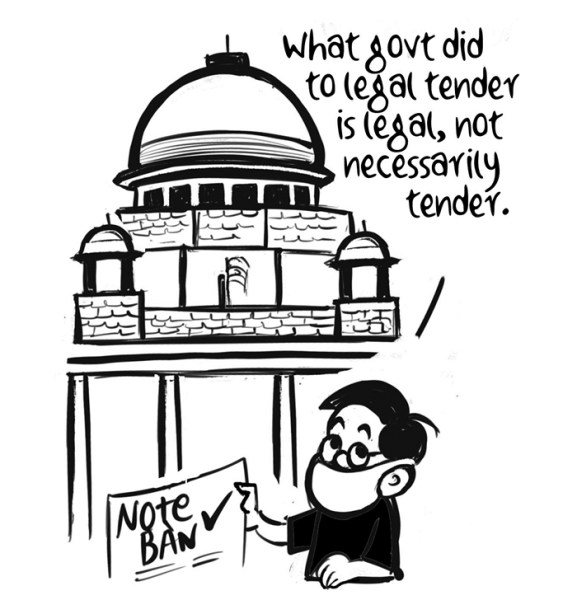
The centre’s decision six years ago to demonetise currency notes of Rs 500 and Rs 1,000 passed the Supreme Court’s test Monday in a majority 4-1 verdict with four judges on a five-judge Constitution Bench holding that the November 8, 2016, notification withdrawing the legal tender of these notes “does not suffer from any flaws in the decision-making process”.

While Justices S Abdul Nazeer, B R Gavai, A S Bopanna and V Ramasubramanian upheld the Government’s move, Justice B V Nagarathna disagreed with the “reasoning and conclusions” in the majority judgment.

Rejecting arguments against the Government’s decision-making process, Justice Gavai, writing for the Bench, said the court had “scrutinised the entire record, i.e., the communication dated 7th November 2016 addressed by the Secretary, Department of Economic Affairs, Ministry of Finance to the Governor, RBI, the Minutes of the Meeting of the Central Board dated 8th November 2016, the recommendations by the RBI dated 8th November 2016 and the Note for the Cabinet Meeting held on 8th November 2016”.

The majority ruling stated: “Upon perusal of the material on record, we are of the considered view that the Central Board had taken into consideration the relevant factors while recommending withdrawal of legal tender of bank notes in the denomination of Rs 500 and Rs 1,000 of existing and any older series in circulation. Similarly, all the relevant factors were placed for consideration before the Cabinet when it took the decision to demonetise.”

Subscriber Only Stories

It said: “It is to be noted that a draft scheme to implement the proposal for demonetisation in a non-disruptive manner with as little inconvenience to the public and business entities as possible was also prepared by the RBI along with the recommendation for demonetisation. The same was also taken into consideration by the Cabinet. As such, we are of the considered view that the contention that the decision-making process suffers from non-consideration of relevant factors and eschewing of the irrelevant factors, is without substance.”

Referring to the communication on November 7, 2016, from the Department of Economic Affairs Secretary to the RBI Governor, the court said that “a perusal…would reveal that the Government of India has shared its concern with regard to infusion of Fake Indian Currency Notes (FICN) and generation of black money. It has been pointed out that FICN infusion is concentrated in the two highest denominations of Indian banknotes of Rs 500 and Rs 1000”.

It said that the “Minutes of the 561st Meeting of the Central Board of Directors of the RBI” on November 8, 2016, “show that the communication dated 7th November 2016 was placed before the Central Board by the Deputy Governor”. “There was an elaborate discussion on the said proposal. The Central Board has considered the pros and cons of the measure. The Central Board has also considered that the proposed step presents a big opportunity to take the process of financial inclusion further by incentivising the use of electronic modes of payment, so that people see the benefits of bank accounts and electronic means of payment over use of cash,” it said.

Advertisement

The Bench said: “The Central Board has taken into consideration that the matter had been under discussion between the Central Government and the RBI for the last six months during which most of the issues raised in the meeting were considered.”

The court rejected the petitioner’s contention that the November 8, 2016, meeting of the Central Board was not valid due to lack of quorum. It said that “a perusal of the Minutes of the Meeting of the Central Board would also show that eight Directors were present in the Meeting whereas the quorum for the meeting is four Directors…”

The majority ruling rejected the two main contentions of the petitioners — that the expression “any” in section 26(2) of the Reserve Bank of India Act, 1934, cannot be interpreted to mean “all” so as to give the Centre the power to demonetise currency notes of all series of any denomination; and that the proposal for demonetisation must emanate from the RBI Central Board and not the Centre.

Advertisement

The court said “the power available to the Central Government under section 26(2)… cannot be restricted to mean that it can be exercised only for ‘one’ or ‘some’ series of bank notes and not for ‘all’ series of bank notes. The power can be exercised for all series of bank notes”.

It added that “merely because on two earlier occasions (1946 and 1978), the demonetisation exercise was by plenary legislation, it cannot be held that such a power would not be available to the Central Government under…the RBI Act”.

The majority ruling said it is a “settled principle that the modern approach of interpretation is a pragmatic one, and not pedantic”. “An interpretation which advances the purpose of the Act and which ensures its smooth and harmonious working must be chosen and the other which leads to absurdity, or confusion, or friction, or contradiction and conflict between its various provisions, or undermines, or tends to defeat or destroy the basic scheme and purpose of the enactment must be eschewed… Ascertainment of legislative intent is the basic rule of statutory construction,” it said.

The court said that the legislative policy underlying the provisions of Section 26 of the RBI Act “is with regard to management and regulation of currency. Demonetisation of notes would certainly be a part of management and regulation of currency”.

The majority ruling said the Centre’s exercise of powers under the provision must have reasonable nexus with the object sought to be achieved. “…if the Central Government finds that fake notes of a particular denomination are widely in circulation or that they are being used to promote terrorism, can it be said, for instance, that out of 20 series of bank notes of a particular denomination, it can demonetise only 19 series of bank notes but not all 20 series? In our view, this will result in nothing else but absurdity and the very purpose for which the power is vested shall stand frustrated,” it stated.

Advertisement

The court also rejected the prayer to read down section sub-section (2) of the Act, saying it “does not provide for excessive delegation inasmuch as there is an inbuilt safeguard that such a power has to be exercised on the recommendation of the Central Board”.

The court held that the November 8, 2016, notification “satisfies the test of proportionality and, as such, cannot be struck down on the said ground”.

Advertisement

The Bench elaborated on the limitations of judicial intervention in matters of economic policy. “…it is not the function of this Court or of any other Court to sit in judgment over such matters of economic policy and they must necessarily be left to the Government of the day to decide since in such matters with regard to the prediction of ultimate results, even the experts can seriously err and doubtlessly differ. The Courts can certainly not be expected to decide them without even the aid of experts,” it said.

The court rejected another argument that the period provided for exchange of demonetised notes was unreasonable.

Advertisement

On the argument that the decision to demonetise was taken in a hasty manner, the court said, “We find that the ‘hasty’ argument would be destructive of the very purpose of demonetisation. Such measures undisputedly are required to be taken with utmost confidentiality and speed. If the news of such a measure is leaked out, it is difficult to imagine how disastrous the consequences would be.”

The petitioners had also argued that the step caused hardship to a number of citizens and the Government should have considered an alternate course of action. The court, however, said “what alternate measure could have been undertaken with a lesser degree of limitation is very difficult to define”.

Adblock test (Why?)


"seal" - Google News
January 02, 2023 at 02:22PM
https://ift.tt/7psDyFV

Demonetisation decision gets Supreme Court seal of approval - The Indian Express
"seal" - Google News
https://ift.tt/0iUKxQw
https://ift.tt/g8nRjrM

Search

Featured Post

This North Texas city has asked large trucks to avoid its quaint downtown. They come anyway - Yahoo News

ragamnyakabar.blogspot.com Glen Rose’s downtown — lined with boutiques, antique shops, bookstores and cafes in early 20th century building...

Postingan Populer