Rechercher dans ce blog

Saturday, March 7, 2020

Psychology Research Explains Panic Over Coronavirus - And How You Can Calm Down - Forbes

[unable to retrieve full-text content]

Psychology Research Explains Panic Over Coronavirus - And How You Can Calm Down  Forbes

"avoid it" - Google News
March 06, 2020 at 11:01PM
https://ift.tt/38tEcEf

Psychology Research Explains Panic Over Coronavirus - And How You Can Calm Down - Forbes
"avoid it" - Google News
https://ift.tt/3844a1y
Shoes Man Tutorial
Pos News Update
Meme Update
Korean Entertainment News
Japan News Update

Friday, March 6, 2020

Avoid Seattle, Trump's top economic advisor says - KUOW News and Information

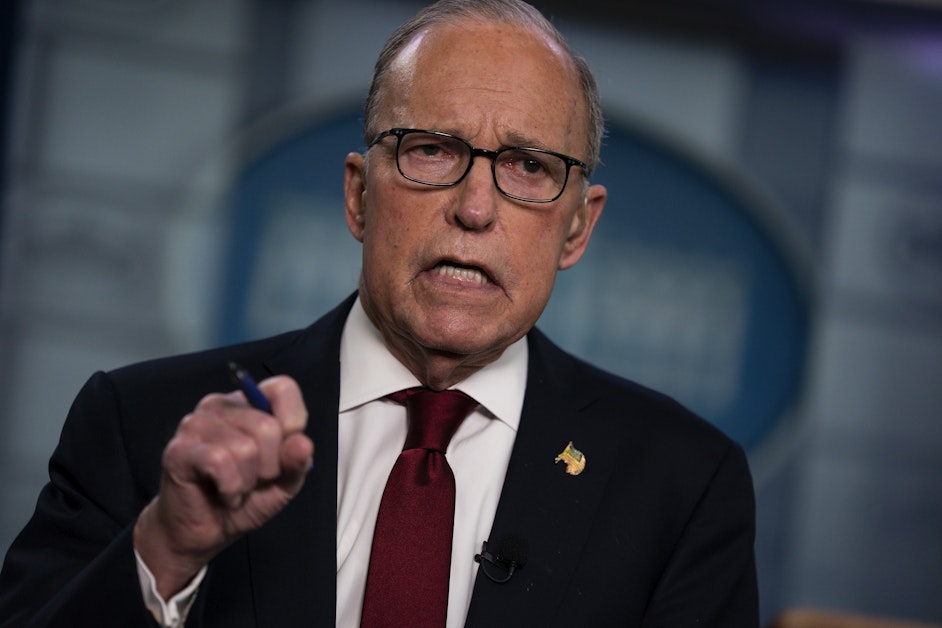
Speaking on the cable business channel CNBC, President Trump’s top economic advisor Larry Kudlow suggested people might want to avoid Seattle.

Seattle is the epicenter of the outbreak of coronvirus in the U.S., with 14 deaths so far, mostly related to a single nursing home in Kirkland.

Kudlow’s main talking points were that people should return to work if they’re healthy – at least in most of America.

“If you get it, 80 percent come out of this with no problem. Now, pre-existing conditions, yeah, you better be really cognizant,” he said. “For most people, if you’re healthy, go back to work. Go back to business. That’s our advice."

He said domestic flight, for the most part, is in good shape – providing people don’t go to countries with travel warnings regarding COVID-19.

"Let's not overreact," he said.

But what about Seattle?

“With respect to Seattle, that would be a place you would avoid for now,” Kudlow said. "Gavin Newsom, Gov. Newsom, declaring California an emergency state, especially northern California, I understand that. Avoid it. But the rest of the country is not suffering from those kinds of breakouts. At least not yet."

Watch the clip:

Kudlow’s tone contrasted with Vice President Mike Pence’s visit to Washington state on Thursday. “As we stand here today, our hearts grieve the loss of 12 Americans, particularly to those families here in Washington state. Please know that you have the condolences of every American. And you're on our hearts for your loss,” Pence said at a news conference at Camp Murray, the state’s National Guard headquarters. Pence is leading the White House’s task force on the coronavirus response. Reviews of the Trump administration’s response to the outbreak have been mixed.

According to the Washington Department of Health, a shipment from the feds represented only about half of the 233,280 N95 respirators, 200,000 surgical procedure masks, 60,000 disposal gowns and 5,000 protective eye shields the state has requested. A DOH spokesperson said the state expects to get the second half of the request, but it's not clear when. On Thursday, The Washington Post reported that Washington's half-filled request was evidence of a shortage of vital medical equipment needed to respond to the growing crisis. The supplies will be reserved for frontline health care workers engaged in the coronavirus response.

Prior to Pence’s arrival in Washington, U.S. Sen. Patty Murray released a sternly worded four-page letter demanding answers to a number of questions about the Trump administration’s handling of the coronavirus response. Of particular concern to Murray were delays in the availability of diagnostic tests.

“I am extremely frustrated by how the Trump Administration has handled the deployment of such tests, including how it has communicated to Congress and the public about when, where, and to whom tests will be available,” Murray wrote in her letter to Pence. “In the midst of this public health emergency, the Trump Administration must do better.”

However, on Tuesday of this week, from his official Twitter account, Inslee struck a more conciliatory tone with the Trump administration. He said he had talked with Pence and CDC Director Robert Redfield and asked them to remove restrictions on access to testing.

“They have announced changes consistent with what I had asked for,” Inslee tweeted. “I appreciate the responsiveness to state requests on COVID-19.”

Let's block ads! (Why?)


"avoid it" - Google News
March 07, 2020 at 03:55AM
https://ift.tt/2wDJmQY

Avoid Seattle, Trump's top economic advisor says - KUOW News and Information
"avoid it" - Google News
https://ift.tt/3844a1y
Shoes Man Tutorial
Pos News Update
Meme Update
Korean Entertainment News
Japan News Update

The Hysteria Of Coronavirus And How To Avoid It - Forbes

[unable to retrieve full-text content]

The Hysteria Of Coronavirus And How To Avoid It  Forbes

"avoid it" - Google News
March 06, 2020 at 10:40PM
https://ift.tt/38tEcEf

The Hysteria Of Coronavirus And How To Avoid It - Forbes
"avoid it" - Google News
https://ift.tt/3844a1y
Shoes Man Tutorial
Pos News Update
Meme Update
Korean Entertainment News
Japan News Update
Thursday, March 5, 2020

How COVID-19 spreads, how to avoid it - Times Colonist

How is the novel coronavirus, or COVID-19, spread?

• Droplets spread when an infected person coughs or sneezes.

article continues below

• Close personal contact such as touching or shaking hands.

• Touching an object with the virus on it, then touching your mouth, nose, or eyes before washing your hands.

How can you prevent it?

• Wash your hands regularly with soap and water for at least 20 seconds.

• If a sink is not available, use alcohol-based hand-rubs to clean your hands as long as they are not visibly soiled. If they are visibly soiled, use a wipe and then a rub.

• Don’t touch your eyes, nose or mouth.

• If you sneeze or cough, cover your mouth and nose with a disposable tissue or the crease of your elbow.

• Regularly clean and disinfect frequently touched surfaces

• Do not share food, drinks, utensils, etc.

Should I wear a mask?

• If you are sick, wearing a mask helps prevent you from passing on illnesses to other people.

• If you are not sick it may be less effective to wear a mask in the community.

Common symptoms:

• Fever, cough, difficulty breathing.

• The available information suggests the incubation period is up to 14 days — the time from when a person is first exposed until symptoms appear.

If you start experiencing symptoms:

• Isolate yourself from others immediately.

• Call a health care professional, a local public health authority or 811.

• Describe your symptoms and travel history. You will receive advice on what to do.

• If you plan to visit a health-care provider, call ahead so that they can arrange to have you assessed safely.

• Wear a mask to protect others.

• Travellers returning from the affected areas listed should self-monitor by taking their temperature in the morning and at nighttime, using a digital thermometer by mouth (oral). Do not take acetaminophen (e.g. Tylenol) or ibuprofen (e.g. Advil) during the 14-day self-isolation period unless your health-care provider advises otherwise.

What is self-monitoring?

• Self-monitoring means you monitor your health and the health of your children for symptoms such as fever, cough and difficulty breathing.

• Anyone who self-monitors is asked to avoid crowded public spaces and places where you cannot easily separate yourself from others if you become ill.

• Individuals who are self-monitoring are allowed to attend and work in school and participate in regular activities.

What is self-isolation?

• Self-isolation means avoiding situations where you could infect other people to help prevent the spread of infections.

• There is a small chance you can spread germs in the days before you feel sick.

• People at high risk of having been exposed to the illness are asked to self-isolate by staying home and to limit contact with others for 14 days.

If you have concerns or questions about your health, contact HealthLinkBC at 811 or speak with your health care provider.

For more information:

Go to healthlinkbc.ca/health-feature/coronavirus-covid-19

Source: HealthLinkBC

Let's block ads! (Why?)


"avoid it" - Google News
March 05, 2020 at 01:15AM
https://ift.tt/2uTuL3f

How COVID-19 spreads, how to avoid it - Times Colonist
"avoid it" - Google News
https://ift.tt/3844a1y
Shoes Man Tutorial
Pos News Update
Meme Update
Korean Entertainment News
Japan News Update

Clark County produces TV special on coronavirus, how to avoid it - Las Vegas Review-Journal

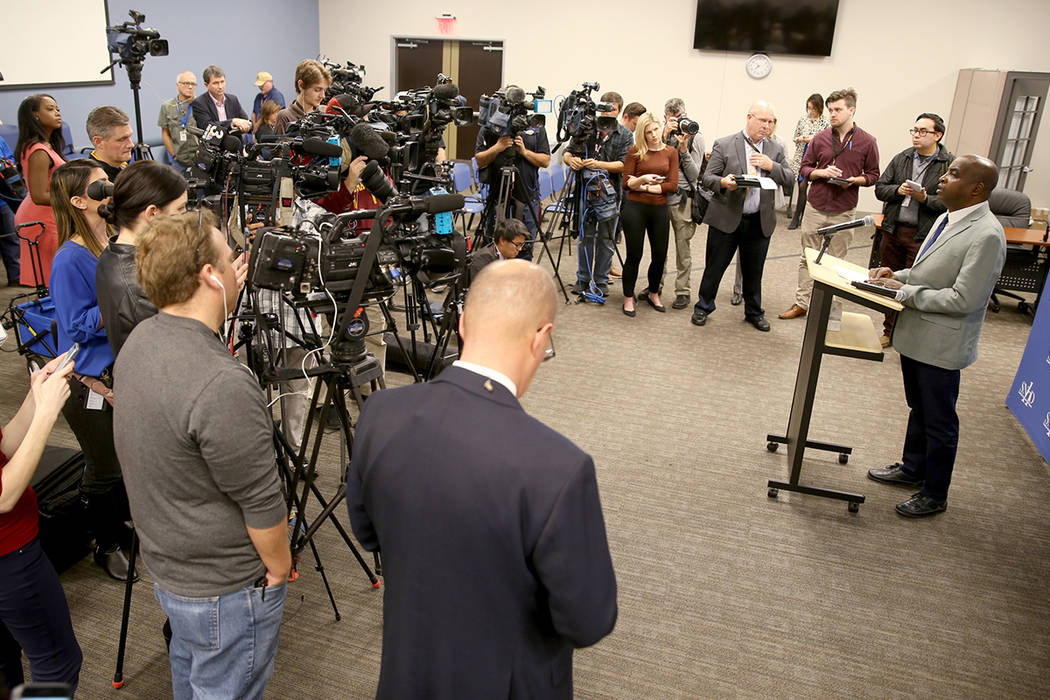
Regional health officials will discuss COVID-19, the disease caused by the new coronavirus, and ways to avoid it in a 30-minute special produced by Clark County.

“Coronavirus: What You Need to Know” will debut at 5:30 p.m. Saturday on Clark County Television.


The special will include advice from:

— Dr. Vit Kraushaar, medical investigator with the Southern Nevada Health District.

— Misty Robinson, public health preparedness planner with SNHD.

— Dr. Shadaba Asad, medical director of infectious disease at University Medical Center.

— Clark County Fire Chief John Steinbeck, who oversaw the county’s Office of Emergency Management until February.

The discussion will cover how the coronavirus is contracted, how to avoid it and how to fight it.

Clark County Television can be found on channels 4 and 1004 on Cox cable and CenturyLink. Its programming also can be seen at ClarkCountyNV.gov and YouTube.com/ClarkCountyNV.

Contact Christopher Lawrence at clawrence@reviewjournal.com or 702-380-4567. Follow @life_onthecouch on Twitter.

Let's block ads! (Why?)


"avoid it" - Google News
March 06, 2020 at 04:03AM
https://ift.tt/2TJGx8v

Clark County produces TV special on coronavirus, how to avoid it - Las Vegas Review-Journal
"avoid it" - Google News
https://ift.tt/3844a1y
Shoes Man Tutorial
Pos News Update
Meme Update
Korean Entertainment News
Japan News Update

How COVID-19 spreads, how to avoid it - The Tri-City News

How is the novel coronavirus, or COVID-19, spread?

• Droplets spread when an infected person coughs or sneezes.

article continues below

• Close personal contact such as touching or shaking hands.

• Touching an object with the virus on it, then touching your mouth, nose, or eyes before washing your hands.

How can you prevent it?

• Wash your hands regularly with soap and water for at least 20 seconds.

• If a sink is not available, use alcohol-based hand-rubs to clean your hands as long as they are not visibly soiled. If they are visibly soiled, use a wipe and then a rub.

• Don’t touch your eyes, nose or mouth.

• If you sneeze or cough, cover your mouth and nose with a disposable tissue or the crease of your elbow.

• Regularly clean and disinfect frequently touched surfaces

• Do not share food, drinks, utensils, etc.

Should I wear a mask?

• If you are sick, wearing a mask helps prevent you from passing on illnesses to other people.

• If you are not sick it may be less effective to wear a mask in the community.

Common symptoms:

• Fever, cough, difficulty breathing.

• The available information suggests the incubation period is up to 14 days — the time from when a person is first exposed until symptoms appear.

If you start experiencing symptoms:

• Isolate yourself from others immediately.

• Call a health care professional, a local public health authority or 811.

• Describe your symptoms and travel history. You will receive advice on what to do.

• If you plan to visit a health-care provider, call ahead so that they can arrange to have you assessed safely.

• Wear a mask to protect others.

• Travellers returning from the affected areas listed should self-monitor by taking their temperature in the morning and at nighttime, using a digital thermometer by mouth (oral). Do not take acetaminophen (e.g. Tylenol) or ibuprofen (e.g. Advil) during the 14-day self-isolation period unless your health-care provider advises otherwise.

What is self-monitoring?

• Self-monitoring means you monitor your health and the health of your children for symptoms such as fever, cough and difficulty breathing.

• Anyone who self-monitors is asked to avoid crowded public spaces and places where you cannot easily separate yourself from others if you become ill.

• Individuals who are self-monitoring are allowed to attend and work in school and participate in regular activities.

What is self-isolation?

• Self-isolation means avoiding situations where you could infect other people to help prevent the spread of infections.

• There is a small chance you can spread germs in the days before you feel sick.

• People at high risk of having been exposed to the illness are asked to self-isolate by staying home and to limit contact with others for 14 days.

If you have concerns or questions about your health, contact HealthLinkBC at 811 or speak with your health care provider.

For more information:

Go to healthlinkbc.ca/health-feature/coronavirus-covid-19

Source: HealthLinkBC

Let's block ads! (Why?)


"avoid it" - Google News
March 05, 2020 at 01:15AM
https://ift.tt/2PQAnT3

How COVID-19 spreads, how to avoid it - The Tri-City News
"avoid it" - Google News
https://ift.tt/3844a1y
Shoes Man Tutorial
Pos News Update
Meme Update
Korean Entertainment News
Japan News Update

Wednesday, March 4, 2020

Federal Trade Commission Explains What a 'Money Mule' is and How to Avoid it | - SpaceCoastDaily.com

Money mule scams happen in several ways

Scammers may try to use you to move stolen money. If you help them, you could be what law enforcement calls a money mule. (FTC image)

BREVARD COUNTY, FLORIDA – Scammers may try to use you to move stolen money. If you help them, you could be what law enforcement calls a money mule.

Money mule scams happen in several ways. The story often involves scams related to online dating, work-at-home jobs, or prizes. Scammers send money to you, sometimes by check, then ask you to send (some of) it to someone else.

They often want you to use gift cards or wire transfers.

Of course, they don’t tell you the money is stolen and they’re lying about the reason to send it. And there never was a relationship, job, or prize. Only a scam.

What happens next? If you deposit the scammer’s check, it may clear but then later turn out to be a fake check. The bank will want you to repay it.

If you give the scammer your account information, they may misuse it. You could even get into legal trouble for helping a scammer move stolen money.

How can you avoid money mule scams?

  • Don’t accept a job that asks you to transfer money. They may tell you to send money to a “client” or “supplier.” Say no.
  • You may be helping a scammer move stolen money.
  • Never send money to collect a prize. That’s always a scam, and they might be trying to get you to move stolen money.
  • Don’t send money back to an online love interest who’s sent you money. Also always a scam — and another a way to get you to move stolen money.
  • Criminals are good at making up reasons to help them move money. Don’t do it. The money may be from other people they scammed. You may be helping criminals hurt people just like you.

If you think you might be involved in a money mule or money transfer scam, stop transferring money. Notify your bank, the wire transfer service, or any gift card companies involved. Then, report it to the FTC at ftc.gov/complaint.

CLICK HERE FOR BREVARD COUNTY NEWS


Click here to contribute your news or announcements Free

Let's block ads! (Why?)


"avoid it" - Google News
March 05, 2020 at 12:54PM
https://ift.tt/3aqD7OX

Federal Trade Commission Explains What a 'Money Mule' is and How to Avoid it | - SpaceCoastDaily.com
"avoid it" - Google News
https://ift.tt/3844a1y
Shoes Man Tutorial
Pos News Update
Meme Update
Korean Entertainment News
Japan News Update

Search

Featured Post

This North Texas city has asked large trucks to avoid its quaint downtown. They come anyway - Yahoo News

ragamnyakabar.blogspot.com Glen Rose’s downtown — lined with boutiques, antique shops, bookstores and cafes in early 20th century building...

Postingan Populer